When we talk about quantum computing, our minds often jump to esoteric laboratories and theoretical breakthroughs. But what happens when a titan of traditional computing, a company synonymous with graphical processing power, enters this nascent field? This is precisely where the story of quantum computing Nvidia becomes fascinating. It’s a narrative not just about silicon and qubits, but about the bridge between classical computation and the quantum realm, and the strategic decisions shaping this future. Are we witnessing Nvidia merely dipping its toes, or is it laying the groundwork for a seismic shift in how quantum challenges are tackled?
The Quantum Leap: Why NVIDIA’s Involvement Matters
Nvidia’s deep understanding of parallel processing and massive computational power, honed over decades in the gaming and AI industries, offers a unique perspective on the quantum landscape. Their involvement isn’t simply about building quantum processors; it’s about building the ecosystem that will allow researchers and developers to harness quantum potential.
Think about it: quantum computers, while revolutionary, will likely coexist with classical systems for the foreseeable future. The complex algorithms required to translate classical data into quantum operations, and to interpret the results, demand immense classical computing muscle. This is where Nvidia’s GPUs and their parallel processing prowess shine. They are instrumental in simulating quantum circuits, a critical step in developing and testing quantum algorithms before they are run on actual quantum hardware.
Beyond Simulation: The CUDA-Q Initiative and Software Ecosystem
One of the most significant developments in quantum computing Nvidia has championed is the CUDA-Q initiative. This isn’t just another programming language; it’s an attempt to unify and accelerate quantum development by leveraging Nvidia’s mature software stack.
Unified Programming: CUDA-Q aims to provide a single programming model that can target both classical and quantum processors. This is a huge stride towards simplifying the complex workflow of quantum algorithm development.
Hardware Agnosticism (to a degree): While Nvidia’s hardware is at the core, CUDA-Q is designed to work with various quantum hardware backends. This suggests a strategy focused on empowering the developer, regardless of the specific quantum processing unit they might eventually use.
Integration with AI: The synergy between quantum computing and artificial intelligence is a hot topic. CUDA-Q is positioned to facilitate this, enabling the exploration of quantum machine learning algorithms that could unlock unprecedented capabilities.
It’s intriguing to ponder how this integration will accelerate breakthroughs. Will the familiar comfort of CUDA lead to a more accessible quantum programming paradigm, akin to how it democratized high-performance computing for AI?
The Hardware Question: Classical Powering Quantum Futures?
While Nvidia is making waves on the software and simulation front, the question of their direct hardware contribution to quantum computing remains a subject of keen interest. They aren’t building superconducting qubits or trapped ions in the same way dedicated quantum hardware startups are. Instead, their strategy appears to be more about enabling and accelerating the use of quantum hardware.
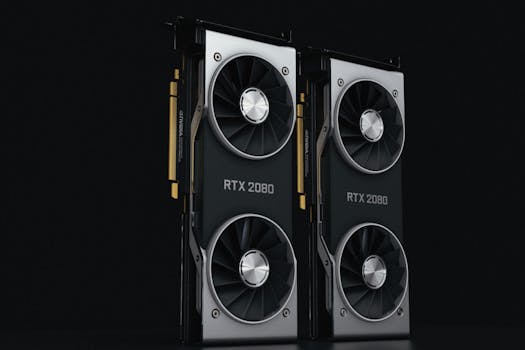
Their high-performance GPUs act as sophisticated accelerators for tasks like quantum circuit simulation. This is crucial because building and controlling qubits is incredibly challenging and expensive. Simulating these systems on powerful classical hardware allows for rapid iteration and discovery without the immediate need for costly physical quantum machines.
Furthermore, Nvidia’s advancements in specialized hardware for AI, like their Tensor Cores, offer lessons that could be applied to developing specialized classical hardware for quantum computing tasks. It’s about finding efficient ways to perform the complex mathematical operations inherent in quantum algorithms.
Demystifying Quantum Algorithms: Nvidia’s Role in Accessibility
Perhaps the most profound impact Nvidia might have is in making quantum computing more accessible. The steep learning curve for quantum mechanics and algorithm design has been a significant barrier. By providing robust software tools and powerful simulation capabilities, Nvidia is lowering that barrier.
Consider a researcher working on a new drug discovery algorithm. Instead of needing direct access to a quantum computer (which might be scarce and expensive), they can use Nvidia’s platform to simulate their algorithm on GPUs. This allows them to test hypotheses, refine their approach, and develop code that can later be executed on actual quantum hardware with greater confidence. This democratization of the research process is, in my experience, often the catalyst for true innovation.
Navigating the Quantum Frontier: What’s Next?
The journey of quantum computing Nvidia is embarking on is far from over. It’s a dynamic space, with rapid advancements on both the classical and quantum fronts. We’re seeing NVIDIA invest heavily in the underlying infrastructure – the classical computation that quantum computers will rely on, and the software that will unlock their potential.
The real question isn’t if Nvidia will be a significant player, but how its unique strengths will shape the quantum computing landscape. Will their approach foster a new generation of quantum developers? Will their simulation capabilities lead to faster discovery of practical quantum applications? As we look ahead, it’s clear that Nvidia’s commitment to the quantum frontier signifies a maturing ecosystem, one where powerful classical computing is not just a prerequisite, but a co-pilot to the quantum revolution.
Final Thoughts: Embracing the Hybrid Future
The narrative around quantum computing can sometimes feel polarized, pitting classical against quantum as competitors. However, Nvidia’s trajectory suggests a more collaborative, hybrid future. Their strategic focus on accelerating quantum development through advanced simulation and unified software stacks points towards a vision where classical and quantum computing work in tandem. Rather than waiting for a fully quantum world, we should be exploring how to leverage the immense power of companies like Nvidia to unlock quantum advantages today*. This integrated approach, I believe, will be the most effective path to realizing the transformative potential of quantum computing.